
 Cadeaux
Quick answer: Clear bins work best when you need to see contents at a glance — pantries, closets, under-sink storage. Fabric baskets suit soft, irregular items like towels, toys, and blankets where visibility matters less than flexibility. Drawer dividers are the right fit for small items inside drawers — cutlery, office supplies, makeup, cables. Most organized homes use all three, matched to the right spot rather than picking one system for everything.
At a Glance
| Clear Bins | Fabric Baskets | Drawer Dividers | |
|---|---|---|---|
| Best for | Pantry, closet, garage, under-sink | Toys, linens, laundry, throws | Cutlery, makeup, office supplies, small tools |
| Visibility | High — contents visible without opening | Low — opaque, contents hidden | High — items laid flat and visible |
| Stackability | Excellent | Poor to moderate | Not applicable (fits inside a drawer) |
| Flexibility with irregular shapes | Low — rigid shape | High — collapses around contents | Low — fixed compartments |
| Water/moisture resistance | High (plastic) | Low (fabric absorbs moisture) | Depends on material (usually low) |
| Typical cost tier | Budget to mid-range | Budget to mid-range | Budget |
| Weak point | Can look clinical/cold in living spaces | Hides clutter rather than organizing it | Only solves drawer-level, not whole-room, organization |
Clear Bins
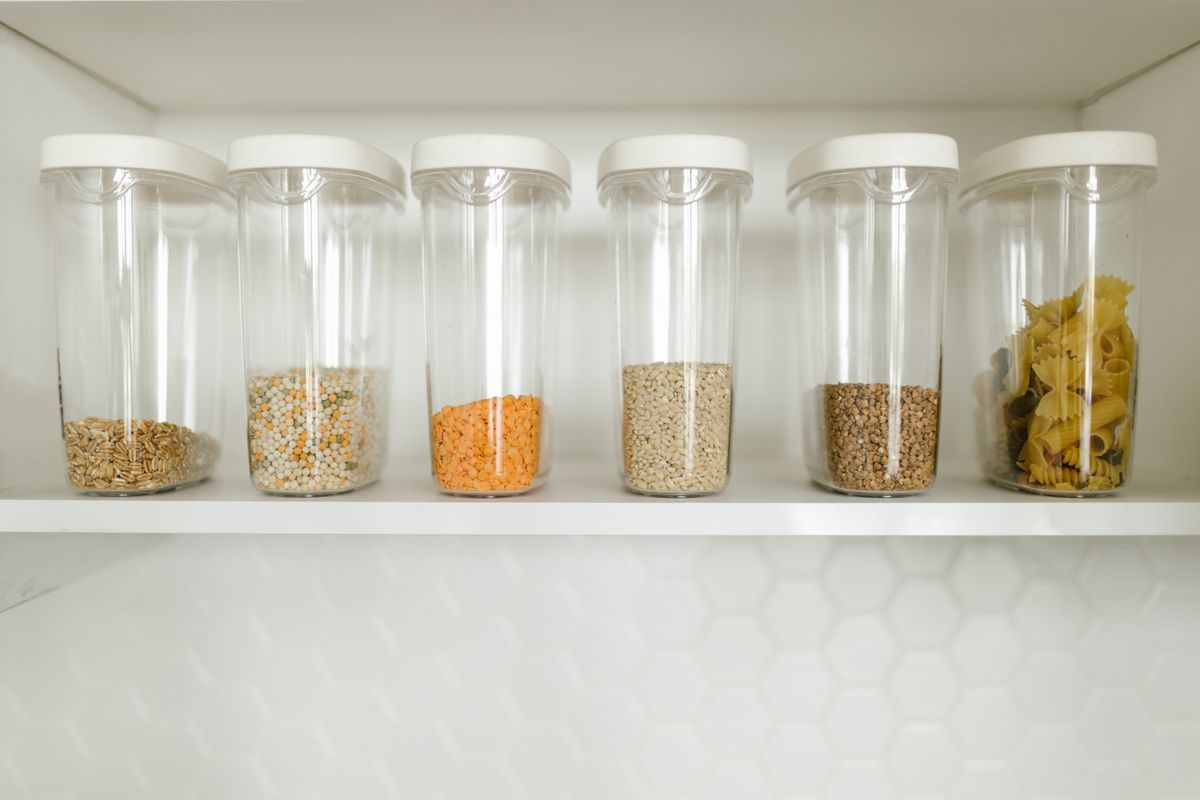
Photo: RDNE Stock Project / Pexels
Clear bins are the default choice for pantries, closets, garages, and under-sink cabinets because you can identify contents without opening or labeling every container — though labeling still helps for items that look similar (flour vs. sugar, for example).
Where they work well: Anywhere you need to grab something quickly and confirm quantity at a glance — pantry staples, cleaning supplies, seasonal decor, craft supplies.
Where they fall short: In open living spaces, rows of plastic bins can look more like a storage unit than a home. They also don't flex around odd-shaped items the way fabric does — a bin sized for cereal boxes wastes space on a single oddly-shaped item.
Fabric Baskets
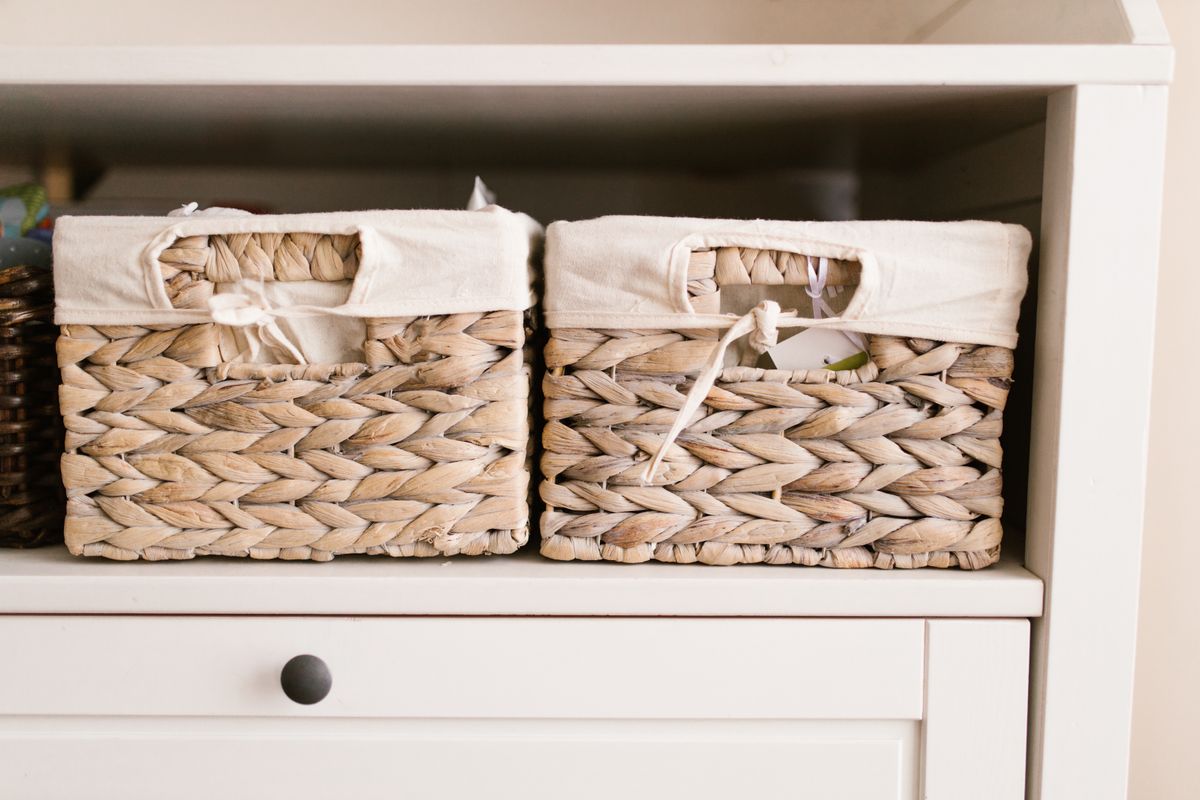
Photo: RDNE Stock Project / Pexels
Fabric baskets trade visibility for flexibility and warmth. Because they're not rigid, they hold irregular items — blankets, stuffed toys, loose cables — better than a fixed plastic shape.
Where they work well: Living rooms and bedrooms, where the basket itself is part of the room's look, and for soft goods that don't need to be seen to be found (towels, out-of-season blankets, kids' toys).
Where they fall short: Because you can't see inside, fabric baskets are the easiest storage system to turn into a dumping ground. A basket with no sorting logic behind it just relocates clutter instead of organizing it.
Drawer Dividers

Photo: PNW Production / Pexels
Drawer dividers solve a narrower problem than the other two: keeping small items inside a drawer from sliding into one pile every time it opens and closes.
Where they work well: Kitchen utensil drawers, bathroom vanity drawers, desk drawers with office supplies, jewelry and makeup drawers.
Where they fall short: They only organize what's already inside a drawer — they don't help with anything sitting on a shelf, counter, or floor. Expandable dividers adjust to different drawer widths; fixed-size dividers often don't fit a second drawer if you move them.
How to Choose
Match the system to the item, not the room:
- Need to identify contents fast? Clear bins.
- Storing soft, irregular, or “visually messy” items in a shared space? Fabric baskets.
- Organizing small items already confined to a drawer? Drawer dividers.
A single kitchen, for example, commonly uses all three: clear bins in the pantry, a fabric basket for reusable shopping bags, and drawer dividers for utensils.
FAQ
Are clear bins better than baskets for closet organization?
For closets, it depends on the shelf's purpose. Clear bins work better on shelves you access occasionally (seasonal items, extra linens) because you can identify contents without pulling every container down. Baskets work better for daily-access shelves holding soft items like scarves or sweaters, where you're comfortable reaching in rather than reading a label.
Do fabric baskets hide clutter instead of organizing it?
They can, if there's no sorting system behind them. A basket labeled “kids' toys” with everything dumped in unsorted is storage, not organization. Assigning each basket a specific, narrow category (building blocks, art supplies) prevents this.
What size drawer dividers should I buy?
Measure the drawer's interior width and depth before buying, and prefer expandable/adjustable dividers over fixed-size ones — a fixed divider that fits one drawer often won't fit the next drawer you organize.
Can I mix all three storage systems in one room?
Yes — most well-organized rooms do. The kitchen example above (bins, basket, dividers) is typical. The goal is matching each storage type to what it does best, not standardizing on one system for the whole room.